

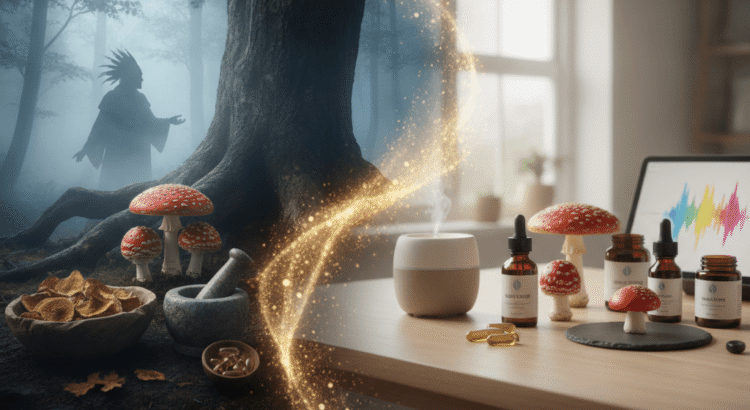
Amanita Muscaria is a mushroom with a striking red cap and white spots. It has captivated human imagination for thousands of years. This distinctive fungus stands out in forests around the globe, from the northern hemisphere’s pine and birch woods to even unexpected corners. Its appearance is iconic, almost fairy-tale like.
My interest in this particular mushroom comes from its deep cultural roots and its evolving presence in modern discussions about natural wellness. I have watched it move from being a subject of ancient myths to a topic of scientific inquiry. There is a lot to learn about its properties and potential uses.
Today, people are looking at natural compounds for health benefits more than ever before. Amanita Muscaria has found itself in this spotlight. We can trace its story from early human societies right up to our current conversations about modern well-being, exploring how views on this remarkable fungus have changed over time.
The Iconic Amanita Muscaria A Brief Introduction
I always find the visual of Amanita Muscaria truly memorable. Its bright red or orange cap, often adorned with white or yellowish flakes, makes it easily recognizable. This mushroom is not just a pretty face in the fungal kingdom. It holds a significant place in both history and science.
It grows in symbiotic relationships with various trees, mainly conifers and birches. This means you can find it in many different environments across the world. From the vast forests of Siberia to the woodlands of North America, its presence is widespread.
For centuries, different cultures have encountered this mushroom, leading to a rich tapestry of folklore and practical applications. Its striking looks often give a hint of its potent chemical makeup. People have both revered and feared it, because they knew it could cause profound experiences.
We see this mushroom appearing in children’s books and holiday decorations, which shows its deep penetration into our collective consciousness. But beyond the imagery, there is a complex story of human interaction with a powerful natural organism. I believe understanding this dual nature, both whimsical and profound, is key.
A Mushroom Steeped in Ancient Lore and Tradition
For a very long time, Amanita Muscaria played a significant role in the spiritual and cultural lives of various indigenous peoples. I have read many accounts of its use in shamanic rituals across Siberia and parts of Northern Europe. These early uses were often tied to seeking altered states of consciousness.
Shamans would consume the mushroom as part of ceremonies. They believed it allowed them to communicate with spirits or gain insights. This was not a casual act. It was a deeply sacred practice, involving specific preparation methods and intentions. The mushroom was seen as a bridge between worlds.
The impact of Amanita Muscaria on these ancient societies cannot be overstated. It was more than just a plant. It was a sacred tool, a guide, and a source of wisdom. This tradition highlights a deep human connection to nature and a search for understanding beyond the ordinary. Learning about Amanita Muscaria history helps us appreciate its long-standing cultural significance.
Myths and Meanings Across Continents
Across different cultures, the mushroom took on various symbolic meanings. Some traditions associated it with fertility and good fortune. Others linked it to figures like Santa Claus, suggesting its red and white colors influenced seasonal imagery.
In certain regions, it was believed to provide strength and courage to warriors. This shows how societies integrated the mushroom into their narratives about power and resilience. The stories surrounding Amanita Muscaria are diverse, but they all point to its profound influence.
I have observed that these historical interpretations were not always about intoxication. They often involved a careful and respectful relationship with the mushroom. People understood its power and used it within a framework of spiritual and communal practices, which is something we can learn from today.
Understanding the Unique Chemistry of Amanita Muscaria
The psychoactive properties of Amanita Muscaria come mainly from two compounds: ibotenic acid and muscimol. When the mushroom is fresh, ibotenic acid is more prominent. This acid is an excitotoxin, which means it can be quite stimulating and sometimes uncomfortable.
However, when the mushroom is dried or cooked, a process called decarboxylation happens. This changes ibotenic acid into muscimol. Muscimol is a potent GABA-A agonist, which means it interacts with neurotransmitters in a way that produces more sedative and dissociative effects. I find this chemical transformation fascinating because it completely alters the experience.
The difference between these two compounds is significant. Raw Amanita Muscaria can cause nausea, dizziness, and muscle twitching, largely due to the ibotenic acid. But when properly prepared, the higher muscimol content leads to a different kind of experience, often described as calming or dreamlike.
From Ibotenic Acid to Muscimol
The conversion of ibotenic acid to muscimol is key to understanding its effects. Heat is the main driver of this change. Drying the mushrooms slowly, or boiling them and discarding the water, are common traditional methods to achieve this conversion. This process makes the mushroom’s effects more predictable.
I have learned that precise preparation can reduce unwanted side effects. It emphasizes how ancient wisdom often had a practical, scientific basis, even if the users did not understand the chemistry. They knew what methods produced the desired outcomes.
This understanding of its chemical makeup is very important for anyone considering its use today. It helps us appreciate why proper handling is not just a suggestion but a necessity for both safety and efficacy. We need to respect the plant’s chemistry.
Modern Applications and Emerging Interest
Today, there is a growing interest in Amanita Muscaria beyond its traditional context. Scientists are starting to research its compounds, especially muscimol, for potential therapeutic uses. I see this as a natural progression, as we explore nature’s pharmacy with new tools.
Some researchers are looking into its effects on sleep, relaxation, and even discomfort. The focus is often on the calming properties of muscimol. This has led to the development of various wellness products that aim to provide specific benefits in controlled dosages.
Consumers are increasingly seeking natural alternatives for everyday well-being. This shift has opened the door for products derived from Amanita Muscaria. But I always stress the importance of understanding what you are taking and where it comes from.
The Shift to Controlled Wellness Products
The modern market sees Amanita Muscaria in forms like tinctures, gummies, and capsules. These products usually come with standardized amounts of muscimol, which aims to provide consistent and predictable effects. This is a significant departure from traditional, less precise methods of consumption.
I believe this trend reflects a desire for both efficacy and safety. Companies are working to isolate the beneficial compounds and remove or reduce the less desirable ones. This careful approach helps to integrate this ancient botanical into contemporary wellness practices in a safe manner.
The goal is often to support relaxation, alleviate stress, or help with sleep. This stands in contrast to the historical uses, which were more about profound altered states. The modern focus is more on gentle, supportive effects for daily life.
Safe Practices and Responsible Consumption
Using Amanita Muscaria safely requires knowledge and respect. First and foremost, never consume a wild mushroom without absolute certainty of its identification. There are many poisonous mushrooms that look similar. I cannot emphasize this enough. Misidentification can have severe consequences.
Traditional methods of preparation involved drying and sometimes boiling the mushrooms. This process helps to convert the more toxic ibotenic acid into muscimol, which is less harmful and has different effects. Understanding these traditional practices gives us valuable safety guidelines.
It is also important to start with very small amounts if experimenting. Everyone reacts differently to plant compounds. What might be a mild dose for one person could be too much for another. Caution is always the best approach when dealing with powerful botanicals.
Preparation Methods for Reduced Toxicity
The primary method to reduce potential toxicity is proper drying. Air-drying or low-heat drying over a period of time encourages the decarboxylation of ibotenic acid into muscimol. This is crucial for making the mushroom’s effects more manageable.
Some traditions also involve boiling the dried mushroom in water. This further helps to extract and transform compounds. Discarding the cooking water is another step often taken to reduce any remaining undesirable substances. These steps show a clear historical understanding of how to manage the mushroom’s potent nature.
I advise anyone interested in prepared Amanita Muscaria products to source them from reputable vendors. These companies should provide clear information about the product’s muscimol content and preparation. Transparency is key for responsible consumption.
The Path Forward for Amanita Muscaria in Wellness
Amanita Muscaria has a unique place in the natural world and in human culture. As scientific research progresses, I believe we will gain a much clearer picture of its full potential. The interest in its relaxing and calming properties is definitely on the rise.
More studies are needed to fully understand its long-term effects and optimal dosages. This will help to integrate it more formally into modern wellness approaches. I look forward to seeing the results of ongoing research in this area.
The future for Amanita Muscaria in wellness seems promising, especially with a focus on informed and responsible use. As consumer awareness grows, so does the demand for safe and well-understood natural products. We are moving towards a more nuanced appreciation of this ancient mushroom.
Unveiling the Future of Amanita Muscaria Wellness
I have explored the remarkable journey of Amanita Muscaria, tracing its path from a revered symbol in ancient traditions to its emerging role in modern wellness. This iconic mushroom, with its rich cultural lore and unique chemical profile, continues to captivate and challenge our understanding of natural compounds. From the shamanic rituals of old, where it was a bridge to spiritual insights, to today’s laboratories and wellness product lines, Amanita Muscaria shows a powerful evolution. Its active compound, muscimol, holds particular interest for its potential calming effects, and this is where much of the modern focus lies. I think it is important to remember the historical respect for this mushroom. It teaches us about careful preparation and responsible interaction. As we continue to uncover its secrets, a balance between ancient wisdom and scientific rigor will be vital. The journey of Amanita Muscaria is not over, and its potential in supporting human well-being is still being understood. I encourage you to stay informed and approach any natural wellness solutions with knowledge and care.